


Blog
Do You Need Armed Guards for Cash Transit? A Bangalore Business Guide

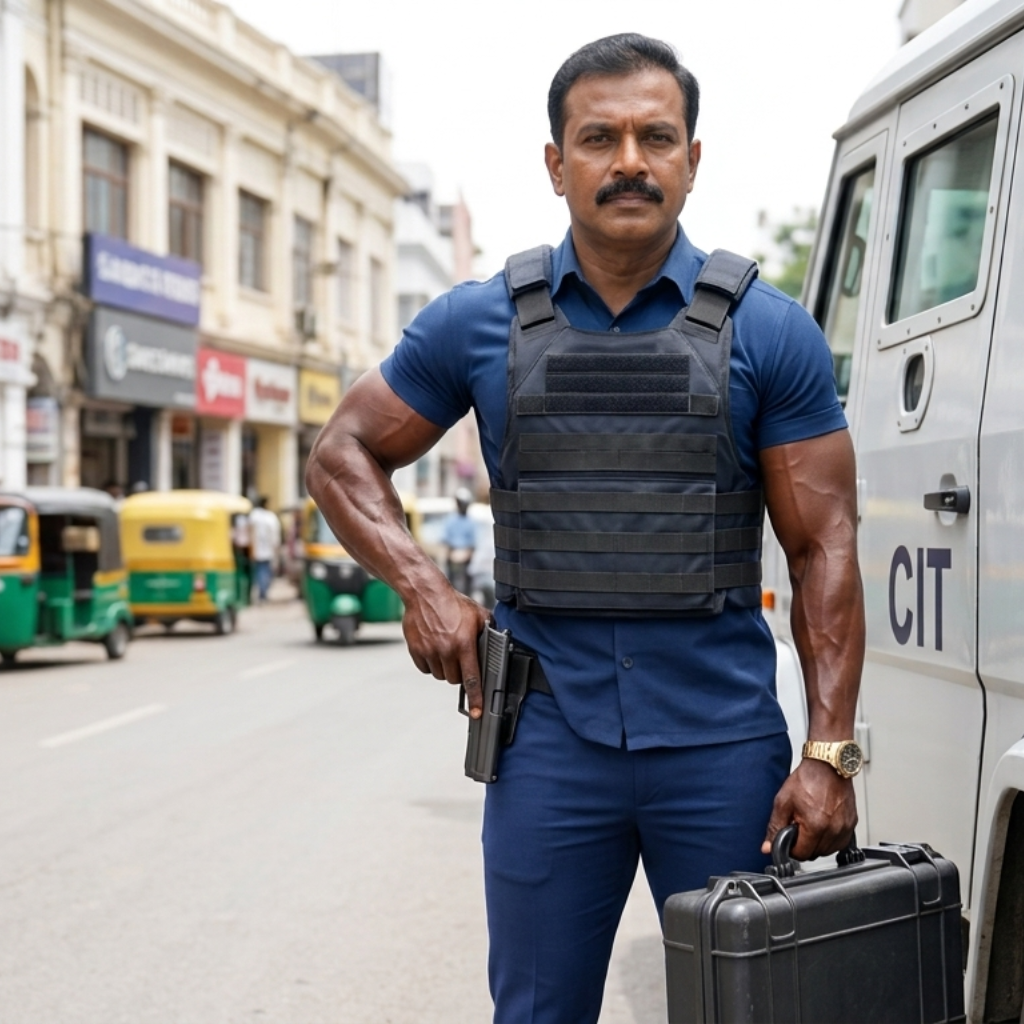
A bank branch manager I know once told me something that stuck with me. He said the day they finally hired proper armed escorts for their cash vans, half his staff visibly relaxed. Not because anything had gone wrong before. But because everyone had been quietly aware of what could go wrong, every single time that van left the branch with lakhs of rupees in the back.
That's really what this comes down to. Cash-in-transit isn't just a logistics problem. It's one of the highest-risk moving targets a financial institution deals with, and treating it casually is how banks and businesses end up as case studies nobody wants to be.
If you're responsible for a bank branch, an ATM network, a cash management company, or any business that regularly moves large sums physically across Bangalore, this is worth understanding properly — not just as a compliance checkbox, but as an actual risk decision.
Why Cash-in-Transit Is a Different Category of Risk
Most business security is about protecting a fixed location. A cash van is a moving target, on public roads, on a predictable schedule, carrying something that's instantly valuable and untraceable once it's gone. That combination makes cash van security in Bangalore fundamentally different from guarding an office or a warehouse.
Predictability is the enemy here. If a van follows the same route, same timing, same staff, day after day, that pattern is exactly what makes it vulnerable. Professional cash transit security services Bangalore providers understand this and build route variation, timing unpredictability, and communication protocols into their standard operating procedure, not as an afterthought.
This is also why cash-in-transit work legally requires a completely different tier of security personnel than standard guarding. You're not hiring someone to check IDs at a gate. You're hiring someone licensed to carry a firearm, trained in armed response, and accountable under a much stricter regulatory framework.
What "Licensed" Actually Means Here
This part matters more than almost anything else in this whole conversation. A licensed gunman service Bangalore provider isn't just someone who owns a weapon and looks the part. In India, armed security personnel operate under a tightly controlled system — licensing under the Arms Act, registration through the relevant state authorities, and operation through an agency registered under the Private Security Agencies Regulation Act (PSARA).
This means every armed guard your provider sends should have documented, verifiable licensing — not a verbal assurance, not "trust us." Ask to see the paperwork. A legitimate gunman service in Bangalore operator will have zero hesitation showing you license numbers, agency registration, and individual guard certification. If a provider gets cagey when you ask for this, that's not a minor red flag. That's a full stop.
Beyond the weapon license itself, proper vetting includes police background verification, psychological fitness assessment in many cases, and documented training records covering firearm handling, situational judgment, and use-of-force protocols under Indian law. This isn't paperwork for paperwork's sake. It's what separates a professional operation from a liability waiting to happen.
What Banks Specifically Need to Know
Banks operate under their own layer of regulatory expectation here, often shaped by RBI guidelines and internal risk audit requirements around cash logistics. Bank cash van security Bangalore arrangements typically need to satisfy not just general security standards but specific institutional compliance requirements too — documented chain of custody for cash, GPS tracking integration, and often coordination protocols with local police stations along regular routes.
If you're a bank branch or a cash management company working with multiple bank clients, your CIT security services Bangalore provider should already understand these compliance layers without you having to explain banking regulations to a security company from scratch. Ask directly about their experience specifically with banking clients, not just general cash transport, because the standards genuinely differ.
Armed Guard vs Cash Escort: Knowing What You're Actually Booking
People sometimes use these terms interchangeably, but there's a practical distinction worth understanding. An armed guard for cash van Bangalore typically travels inside or alongside the vehicle itself, providing direct, continuous protection during the entire movement of cash from point A to point B.
Cash escort security Bangalore sometimes refers to a broader arrangement — potentially involving a lead or follow vehicle, additional personnel monitoring the route, or coordination with a control room tracking the movement in real time. Larger cash volumes or higher-risk routes often call for this expanded escort model rather than a single armed guard riding along.
Ask your provider to clearly explain which model they're proposing and why, based on your specific cash volumes, route risk, and frequency. A provider who defaults to the same setup regardless of your actual exposure isn't tailoring the service to your risk. They're just running a standard package.
What a Proper Setup Actually Looks Like
A well-run cash-in-transit operation isn't just "guard plus van." There's structure behind it that most people never see unless they ask directly.
Route planning happens before cash ever leaves the building, with variation built in so the same path isn't used predictably every single day. Communication protocols keep the van in contact with a control point throughout the journey, so if something feels off, there's an immediate escalation path rather than a driver and guard figuring it out alone on the road.
Vehicle standards matter too. Reinforced or armored vehicles are standard for higher cash volumes, and even standard vans used for this purpose should meet baseline security modifications — secure compartments, tracking devices, and communication equipment that doesn't depend on a single point of failure like one guard's personal phone.
Staff pairing and rotation also matters more than people realize. Predictable staffing, same two people every single run, creates its own risk over time. Good armed security services in Bangalore providers rotate personnel periodically as part of their own internal risk management, not just for scheduling convenience.
The Cost Conversation, Honestly
Armed security costs more than standard guarding, and it should. You're paying for specialized licensing, higher insurance coverage, more rigorous training, and a level of accountability that basic security work doesn't carry. Pricing for cash in transit services Bangalore wide typically factors in the number of armed personnel required per run, vehicle type, route distance and frequency, and cash volume being transported, since higher-value transport generally comes with heightened staffing and escort requirements.
Be wary of quotes that seem unusually low compared to other providers offering similar coverage. Armed security done properly involves real costs behind the scenes — licensing compliance, insurance, background verification, ongoing training — and a price that ignores all of that is either cutting corners somewhere or simply isn't sustainable long enough to be reliable when you actually need it.
Questions to Ask Before You Sign Anything
Before committing to any provider, get direct answers to a few non-negotiable questions. Ask for proof of PSARA registration and individual armed guard licensing, not just a general claim of being "licensed." Ask how they handle route planning and whether they vary routes and timing as standard practice, not an optional extra.
Ask about their insurance coverage specifically for cash-in-transit incidents, and what the claims process looks like if something does go wrong. Ask how quickly they can respond to a request for additional coverage during high-cash periods, like festival seasons or month-end banking cycles when cash volumes typically spike.
And ask about their track record specifically with financial institutions, not just general armed guarding experience. Cash-in-transit for a bank carries different regulatory and operational expectations than, say, armed security for a jewelry store, and a provider's relevant experience should match what you actually need.
The Bottom Line
Moving cash isn't a routine errand, even though it might feel that way after the hundredth uneventful run. The entire point of proper armed security is that nothing goes wrong, precisely because the right precautions were in place before anything needed to. That's not a service you want to shop for based on price alone, and it's not one where "we've been fine so far" is a real risk strategy.
If your business handles cash logistics in Bangalore, whether it's a single branch or a network of ATMs and collection points, this is worth a serious conversation with a properly licensed provider before your next audit forces the question for you.
Talk to a Licensed Provider Before You Need One
If you're responsible for cash logistics, bank branch security, or ATM cash replenishment routes in Bangalore, get in touch for a confidential risk assessment. We'll walk you through exactly what proper armed escort and cash-in-transit security looks like for your specific volume and route risk, backed by full licensing documentation.
Call our team today or fill out the contact form for a consultation on armed guard and cash van security services in Bangalore.
Frequently Asked Questions
1. What licenses should an armed gunman service in Bangalore actually have? They should hold valid Arms Act licensing for each armed guard, agency registration under the Private Security Agencies Regulation Act (PSARA), and documented police verification for all personnel. Always ask to see this documentation directly rather than accepting a verbal assurance.
2. What's the difference between an armed guard and a cash escort service? An armed guard typically travels directly with the cash van, providing continuous on-vehicle protection. A cash escort service often involves a broader setup with lead or follow vehicles and real-time route monitoring, usually used for higher cash volumes or higher-risk routes.
3. Do banks have specific compliance requirements for cash van security beyond general regulations? Yes, banks typically need to satisfy internal risk audit standards and broader regulatory expectations around cash logistics, including documented chain of custody and route tracking. A provider experienced with banking clients specifically will already understand these requirements.
4. How is pricing determined for cash-in-transit security services? Pricing depends on the number of armed personnel required, vehicle type, route distance and frequency, and the cash volume being transported. Higher-value transport generally requires more staffing and escort coverage, which affects overall cost.
5. How often should routes and timing be varied for cash van security? Predictable routes and schedules increase risk over time, so professional providers build route and timing variation into standard operating procedure rather than running the same path at the same time every single day.